“If Stone could Speak…” Northfield Quarries

If the granite blocks that serve as footings under the bridges along the Connecticut River or granite that was used in the construction of buildings, such as those on the Northfield campus or the Dickinson Memorial Library, if those stones could speak, they might tell us from where they came. We understand that the granite on these projects came, in many cases, from the hills of Northfield if not from nearby.

Some of the stone came from a quarry in Northfield Farms on land that is now owned by the Northfield Mountain facility. Stone cutters, or masons, came to live in the neighborhood and were hired to cut the stone and draw it down to the river with big horse-drawn sleds. There it was loaded onto a barge that would float its consignment down the river to be used in the construction of the Turners Falls Bridge.

Another quarry was up off of South Mountain Road and much of the granite used for buildings at the Northfield Mount Hermon Schools was drawn from there, railroad cars employed to transfer the heavy load down to the railroad line at the bottom of the hill. There was another quarry over the state line into Winchester that was mined. The quarries have long since gone silent leaving a legacy to further explore.
Joel Fowler, 2024

“If Stones Could Speak…” Mount Hermon Cemetery

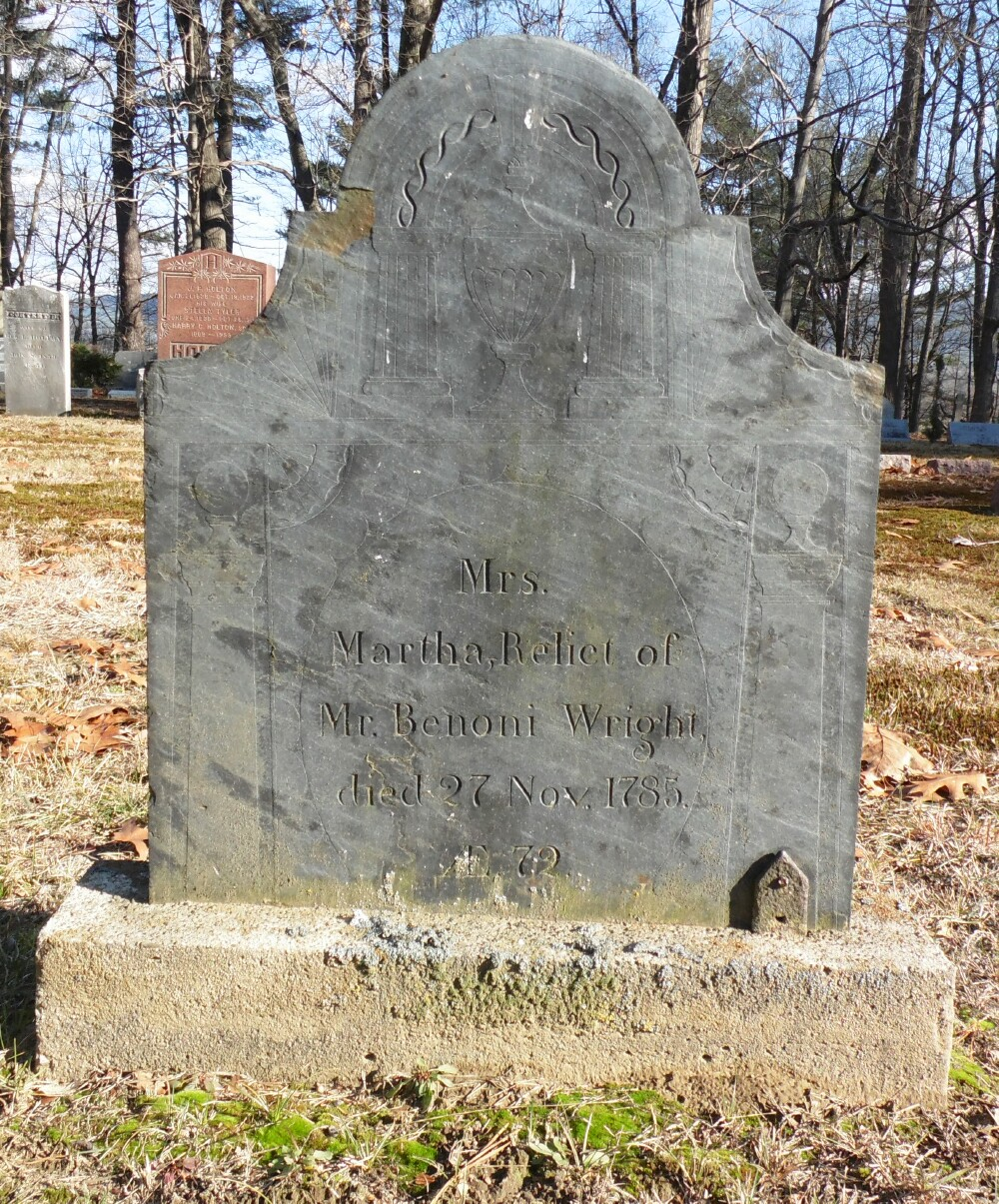
There are eight public burying grounds in the town of Northfield. That doesn’t count Round Top where D.L. Moody and his wife, Emma, repose, or Evelyn Hall’s resting place next to Our Lady of Perpetual Help Chapel (formerly Sage Chapel) to name only two other gravesites. One in particular holds special interest to anyone who might care about the history of Mr. Moody’s schools. Its origins date to the time before the residents of Grass Hill, today, the campus of Northfield Mount Hermon voted (February 28, 1795) to secede from Northfield and join the town of Gill. The earliest surviving stone that I’ve seen there reads:

Mrs.
Martha, Relict of
Mr. Benoni Wright
died 27 Nov 1785

But it isn’t these early gravestones that attract the attention of this writer, it is the vast majority of all of the others: those men, women, and children, and their children, and their children’s children, who both figuratively and sometimes literally gave their lives to Mr. Moody’s schools. As the current archivist at Northfield Mount Hermon, I’m fond of saying that all of my friends are there. The names of so many former employees from lofty principals to those whom Carleton Finch dubbed “the lesser saints” adorn the granite tombstones that I hesitate to name any of them, not wanting to slight the neighbor resting right alongside.

Sadly, it isn’t only those names from school histories that one finds when one walks these grounds. A corner of the cemetery is dedicated to Mount Hermon students who lost their lives while at the school. Some died so far from home that burial here only made financial sense, others had no home but the school. Another group of former students here chose this place to be remembered because their years on the nearby campus were among the best of their lives.

compiled by NHS Board Member and NMH Archivist, Peter Weis, 2024

“If Stones Could Speak…” Council Rock

There is much that the many old stones in Northfield could say. Some memorial stones do have inscriptions on them and tell briefly of past events. Some can be seen at http://www.northfieldpubliclibrary.org/historic-monuments. Gravestones scattered throughout Northfield document many people who are buried here. Find these on Find a Grave.

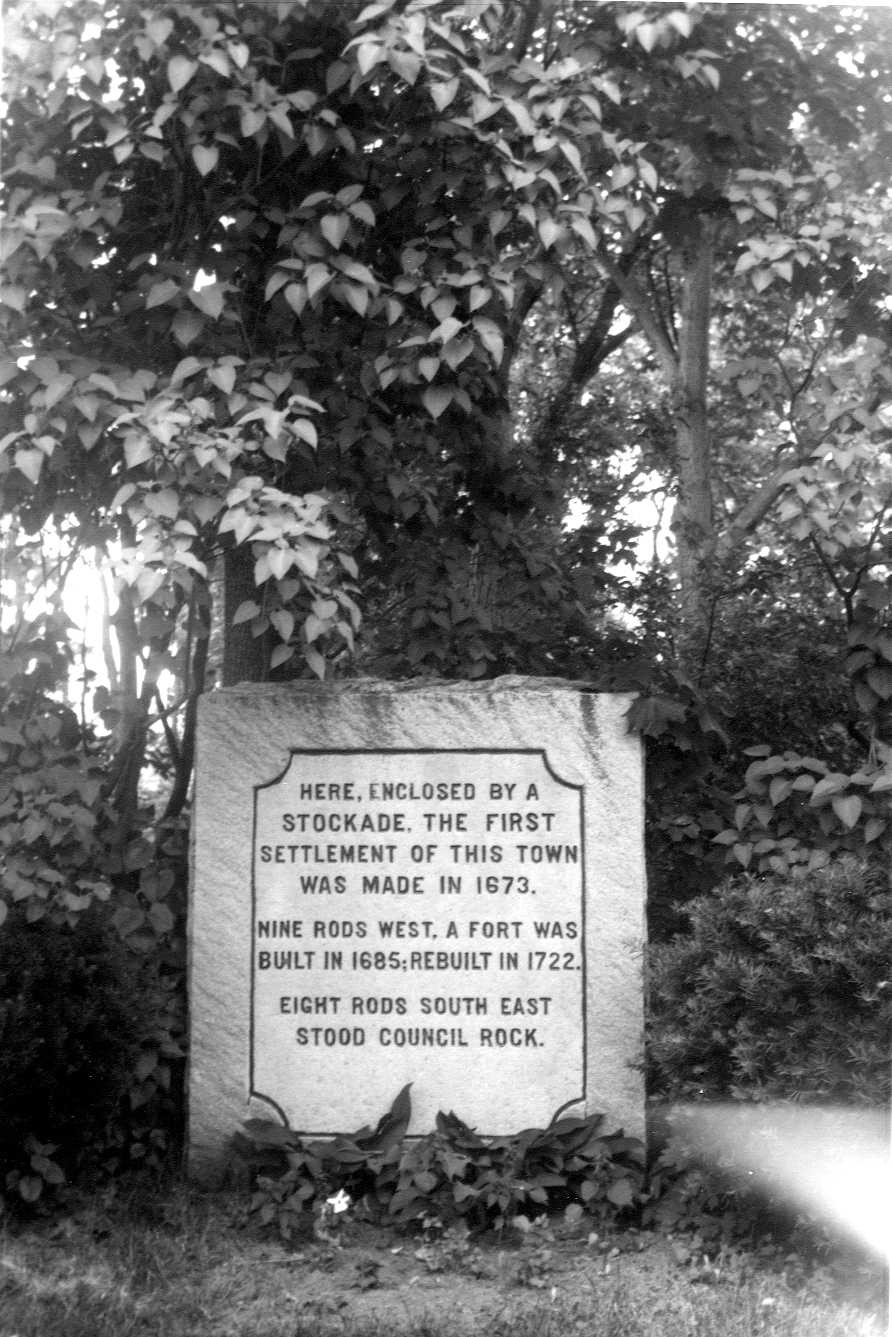
But other stones are silent and some have even disappeared altogether. One such stone is Council Rock. According to Temple & Sheldon’s 1875 History of Northfield “it was a huge mass of pudding stone that cropped out in the middle of the town street just against the south Warwick road” (now Maple St). It was about three feet high, 20 x 30’ and nearly flat on top. “The old men were accustomed to gather on summer evenings to hear the news, discuss politics and tell stories; and the boys were on hand to listen to the stories, or have a game of gaol,” which seems to have been a game also called prisoner’s base, where one team attempts to tag and imprison members from the other team.

compiled by NHS President, Joel Fowler, 2024

Dr. Elijah Stratton and his Shay

Dr. Elijah Stratton (1811-1876) was and eighth generation Stratton in Massachusetts, the family coming to Northfield from Concord in 1715. The first Stratton originally had property stretching from 80-88 Main St. One of the Hezekiah Strattons in this line moved early to the Northfield Farms and was proprietor of the Stratton Tavern (now gone). Dr. Stratton was born there, but moved back up the street and had the Stearns Brothers build his house at 30 Main St. in about 1844. The shay in which he made his rounds can still be seen at the Historical Society Museum and will be featured in the 350th Parade in September 2023.